GRB Optical Counterpart
Suspect that turns out in an artifact
Burst Info
GRB Detection Date: 02/08/01 12:58:41.89 UT
GRB Notice Date: Thu 01 Aug 02 14:54:54 UT
Center of Error Pattern RA: 314.786d {+20h 59m 09s} (J2000), Dec:
-51.924d {-51d 55' 25"} (J2000), Error Pattern Size (arc min): 777.85min
Type of Notice (see web page for details): HETE Ground Analysis Comments
from GCN: Definite GRB. Burst_Validity flag is true. HETE GRB Coordinates.
WXM S/N is less than a reasonable value.
WXM data refined since S/C_Last Notice.
Long event (~300s)
WXM X localization is very good, but the Y localization
is weak. The error box here is calculated using the X
localization and an assumption of Y localization
limits based on the illumination pattern of the wires
in the WXM X detector.
The same localization is found for HETE burst 2178,
detected ~300s after 2177.
Trying to detect optical counterpart of
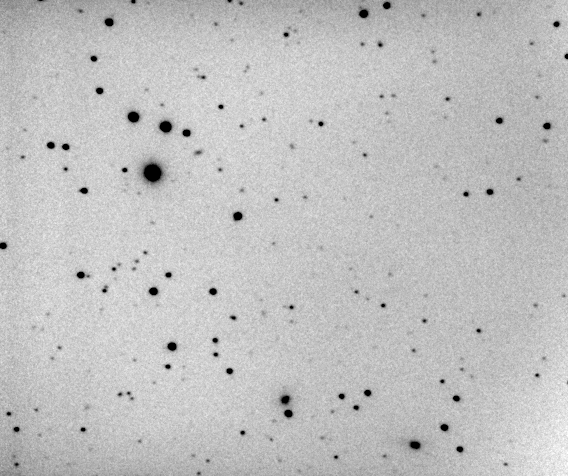
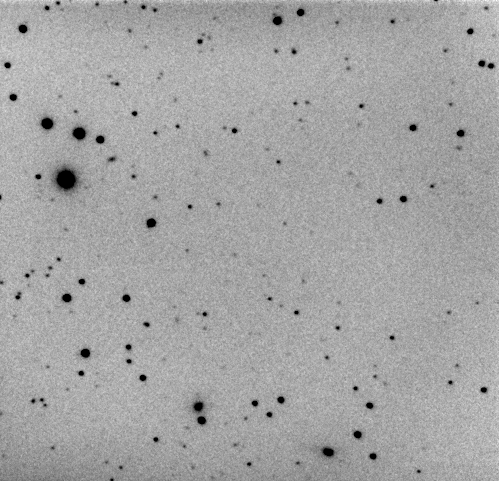
HETE 2177/2178 we shot two images of region in Indus as below. Each image
was a composite of some 60x30 seconds in a 10"SCT
One thing strange was the very very far
away galaxy
APMUKS(BJ) B205539.73-520903.4,
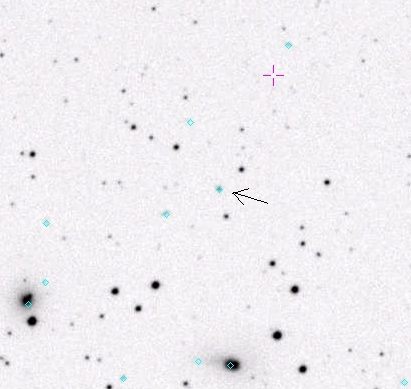
located some 2.5 arc min from central position as imaged below in DSS2. The
pink cross is the center position of HETE burst. The arrow indicates the
galaxy.
Photometry
19.1C
Position
20h 59m 14.7s -51d 57m 21.5s
Images taken at 00:30 UT and 01:00 UT
08.02.2002 with a 10"SCT F4 and HX516CCD
Comparing details of the two images and
DSS2 suggests that we can have a supernova as indicated from elongated image
of galaxy near the center of images and double profile as below
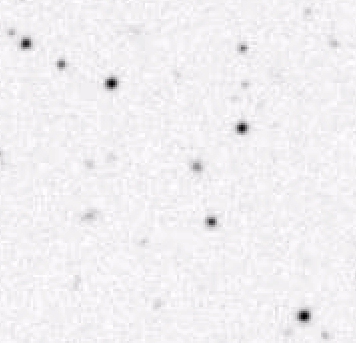
DSS detail above. Note that the galaxy
at left is elongated spiral and the object at center is more like an
elliptical.
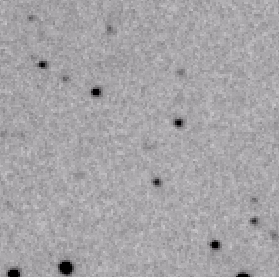
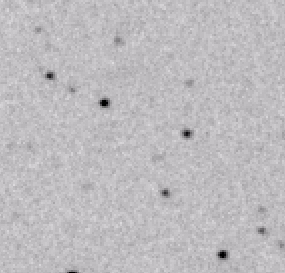
Details of my two images. Note
elongation in same direction of the two galaxies.
Below the double peak profile of galaxy
image at center suggesting a supernova or anything like it
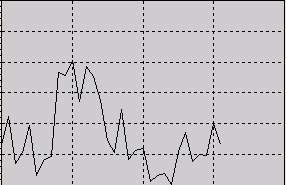
The image I´ve obtained in the next day
shows that it was probably an artifact as shown below.